
At VIB, pioneering life sciences research goes hand in hand with responsible operations. We recognise that our high-consuming laboratory environments, complex supply chains, and international collaborations come with a significant environmental footprint. In 2025, we continued to operationalise our sustainability strategy through building decarbonisation, renewable energy, sustainable mobility, circular practices, and workforce engagement. In this report, we present our actions and performance over 2025 — showing how we embed sustainability into the way we conduct science and run our institute.
VIB is a life sciences research institute conducting pioneering fundamental and translational research across human disease mechanisms and plant biology. Operating primarily in Belgium through multiple sites in Ghent, Deinze, and Brussels, VIB bridges science and society via technology transfer, spin-offs, IP licensing, shared core facilities (VIB Technologies), training and conferences, and bio-incubator infrastructure for biotech start-ups. VIB operates as a non-profit association (VZW) with 970.9 FTE employees and a turnover of €52.6 million.
Conducting frontline biomolecular research in life sciences for the benefit of scientific progress and the benefit of society, while integrating sustainability into research, operations, and decision-making.

To be a frontrunner in sustainability among life sciences research institutes, achieving climate neutrality by 2050 while continuing to deliver pioneering science with positive societal impact.
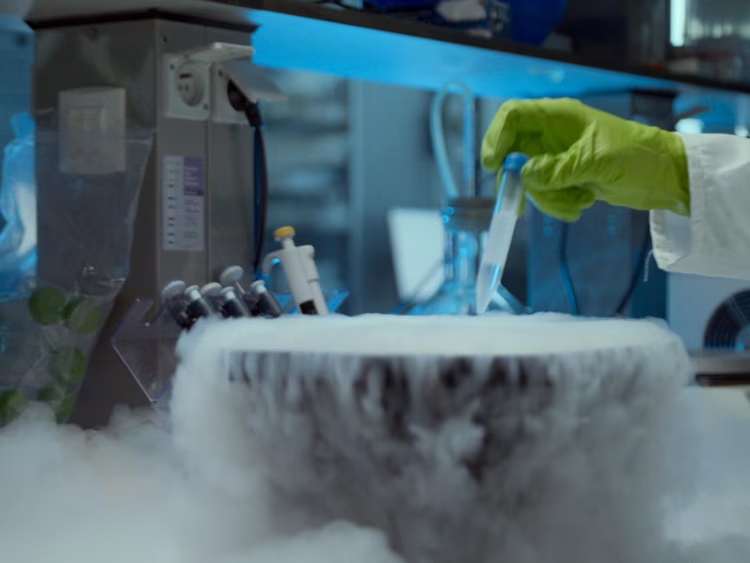
VIB's core activities include: pioneering life sciences research across human disease mechanisms and plant biology; technology transfer via the Innovation & Business team (partnerships, spin-offs, IP licensing); VIB Technologies (shared core facilities and Expertise Units); Training & Conferences (cutting-edge science, technologies, and professional skills); and bio-incubator infrastructure in Leuven, Ghent, Nevele, and Brussels for biotech start-ups.
VIB adopted a decarbonisation plan targeting climate neutrality by 2050. Interim targets are set against a 2023 baseline: Scope 1 −42%, Scope 2 −60%, Scope 3 −25%, and total −28% by 2030. The plan is aligned with SBTi and EU climate strategies (Regulation (EU) 2021/1119). Planned contributions sum to 10,360 tCO₂e against the 10,200 tCO₂e 2030 target, indicating the plan's measures are designed to meet or slightly exceed the targeted reductions.
All electricity consumed across VIB sites is certified renewable through power purchase agreements. 1,101 on-site solar panels generate approximately 570,665 kWh per year, avoiding 119 tCO₂e annually. A 30% reduction in Scope 2 emissions has already been achieved.
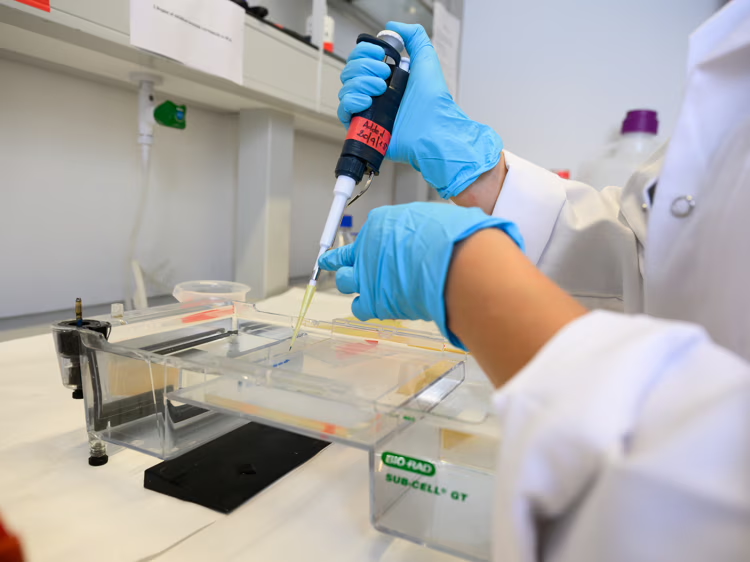
VIB rolled out the Laboratory Efficiency Assessment Framework (LEAF) certification to embed sustainable lab practices in research group processes. By end of 2025, 46 research groups across 10 centres have been certified: 28 Bronze, 12 Silver, and 6 Gold. Further expansion is planned.
A CSRD-aligned double materiality assessment provides the foundation of the sustainability strategy and prioritises impacts, risks, and opportunities. Focus areas identified: own workforce, climate change, and circular economy. The assessment is aligned with ESRS and informs VSME reporting preparation.
A defined sustainability governance structure is in place: steer group (CFO/HR/COMM/MD), Directors' Committee, topical working groups (mobility, purchasing, waste, travel), reporting and communication groups, centre eco-teams, and focal points. The Board of Directors has expressed the ambition for VIB to be a frontrunner in sustainability.
Full-scope carbon accounting was conducted using the GHG Protocol, establishing a 2023 baseline of 36,892 tCO₂e (Scope 3: 89.6%; Scope 1: 5.6%; Scope 2: 4.9%). All 15 Scope 3 categories are reported. This baseline informs priorities and actions across the transition plan.
VIB rolled out a Code of Conduct e-Learning module and expanded its support structures, including a confidential advisor network and workshops on conflict management and the active bystander approach. A second edition of Appreciation Month strengthened the feedback culture and recognition across teams.
VIB co-organized the Diversity in Science conference in Leuven and ran unconscious bias workshops for postdocs to embed equity in recruitment. The Called to Science podcast highlights role models for women, and VIB took part in the EU-LIFE Pathfinder mentoring program for women postdocs.
The first VIB-wide Diversity Week brought talks, workshops and a DE&I pocket glossary to the broader community. A campaign highlighted the gender data gap in research, and a new conversation guide was introduced to support requests for reasonable accommodations for colleagues with invisible disabilities or mental health conditions.
Owned buildings (FSVM1, FSVM2, BIC1 & BIC2) are being retrofitted with hybrid heating systems, heat recuperation, EC motors on air handling units, and VAV valves to reduce ventilation energy use. LED relighting, freezer management (ULT setpoints raised to −70°C), and BMS calibration complement these measures. Contribution: 828 tCO₂e (buildings) + 1,143 tCO₂e (efficiency & PPAs).
481 solar PV panels are deployed on FSVM1 and FSVM2 (38 tCO₂e contribution). 100% of electricity is certified renewable through PPAs. Total: 1,101 solar panels (~570,665 kWh/year, avoiding 119 tCO₂e/year). A 30% Scope 2 reduction has already been achieved.
A 50/50 modal shift target drives bike lease/allowance, improved bike facilities, and reduced parking. Fleet electrification contributes 620 tCO₂e. Together: 870 tCO₂e (≈40% reduction of 2023 mobility emissions).
An 8-hour rule discourages flights where rail alternatives exist. A CO₂ contribution is charged per flight and first-class train travel is reimbursed. Contribution: 495 tCO₂e (≈40% reduction of 2023 travel emissions).
CO₂ criteria are embedded in purchasing and tenders. The 5R campaign, ERP punch-out, equipment exchange platform, and transport decarbonisation target a combined 6,060 tCO₂e. Suppliers must share scope 1 and 2 emissions within one year. Target: −25% purchased goods & services emissions by 2030.
"Scientist meets supplier" events identify sustainable solvent alternatives. Systematic SDS review, regular water quality testing, and phosphorus-poor products in water treatment ensure compliant discharge.
An action plan disconnects pond overflow and rainwater from wastewater. Phosphorus-free maintenance products and RO water in steam boilers enable blowdown reuse. VIB co-promotes the "Sky Water Ardoyen" project to create a water-positive business park before 2027.
Eco-teams support the local "Rijvissche" biodiversity project by Natuurpunt. Annual biodiversity walks at all VIB locations. PSB researches climate-smart plants and generates reference genomes for threatened and endangered species, contributing to global biodiversity conservation.
A 50% recyclable waste target by 2030 drives waste audits, centralized waste islands, and sorting of non-contaminated plastics in wet labs. The 5R campaign (Refuse, Reduce, Reuse, Repurpose, Recycle) and the equipment exchange platform support reuse and repairability. LEAF certification embeds resource-efficient practices across 46 research groups.
LEAF lab sustainability certification (issued by UCL) embeds sustainable practices in research group processes. 46 groups are certified (Bronze 28, Silver 12, Gold 6). Centre eco-teams implement actions including waste islands, ULT freezer adjustments, and switch-off policies.
Training is delivered via the Training & Conferences programme and CRM Academy. Male training hours: 21,295 total; Female: 23,967 total. Health & safety: 3 recordable accidents in 1,556,263 hours worked (rate: 0.39), zero fatalities. 100% of employees covered by collective bargaining agreements.
Diversity is actively promoted and targets are set. Female-to-male ratio at management level: 30% (6 female vs 14 male). Code of Conduct addresses discrimination, harassment, bullying, and abuse of power. Whistleblowing Policy (effective 1 June 2023) with confidentiality protections and anti-retaliation safeguards.
A sustainability steer group (CFO/HR/COMM/MD) confirms policies, targets, and actions. Good Governance Charter includes Code of Ethics and scientific integrity charter. Anti-corruption policies aligned with the UN Convention against Corruption. Whistleblowing Policy provides internal reporting platform with anti-retaliation protections.
Annual human rights due diligence surveys are conducted with main suppliers. Suppliers must share sustainability reports or complete VIB surveys. Tenders include environmental management (ISO 14001/EMAS), transport standards (Euro VI+), and packaging criteria (EU regulation). Target: 50% delivery transport reduction by 2030.
*This number refers to the staff on VIB-payroll. When including all non-payroll staff working in VIB centers the number is 1,950.7 FTE
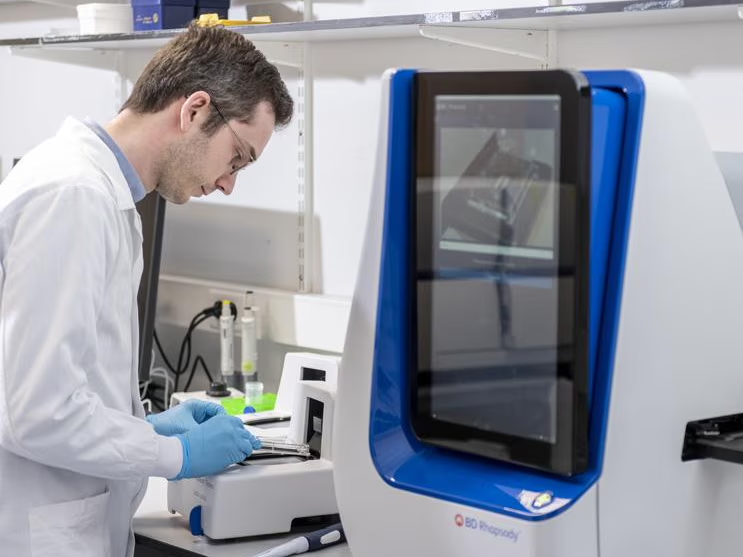
VIB's sustainability steer group (CFO/HR/COMM/MD) sets the general strategy and objectives relating to sustainability matters. It confirms proposals for policies, targets and actions, and reviews progress. The Directors' Committee implements sustainability policies, actions and targets across the institute.
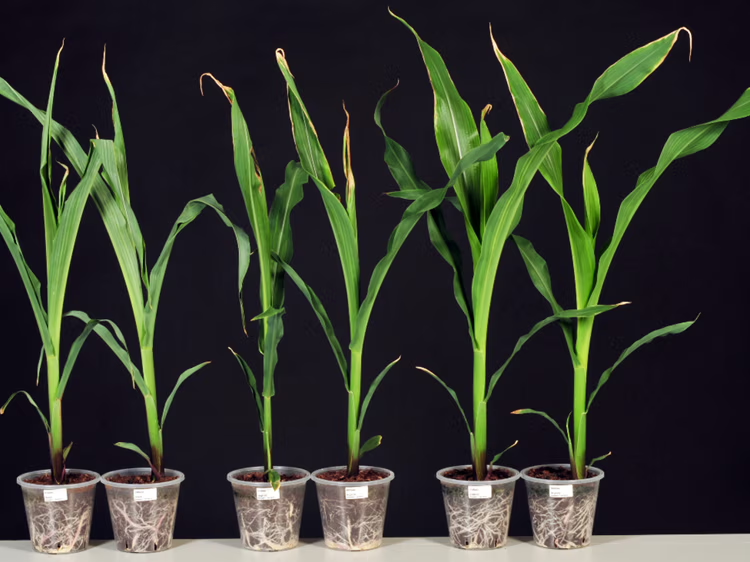
Center eco-teams of engaged volunteers drive grassroots sustainability actions in day-to-day lab environments. VIB has rolled out the LEAF (Laboratory Efficiency Assessment Framework) certification across research groups, with 46 groups certified across ten centers as of November 2025.
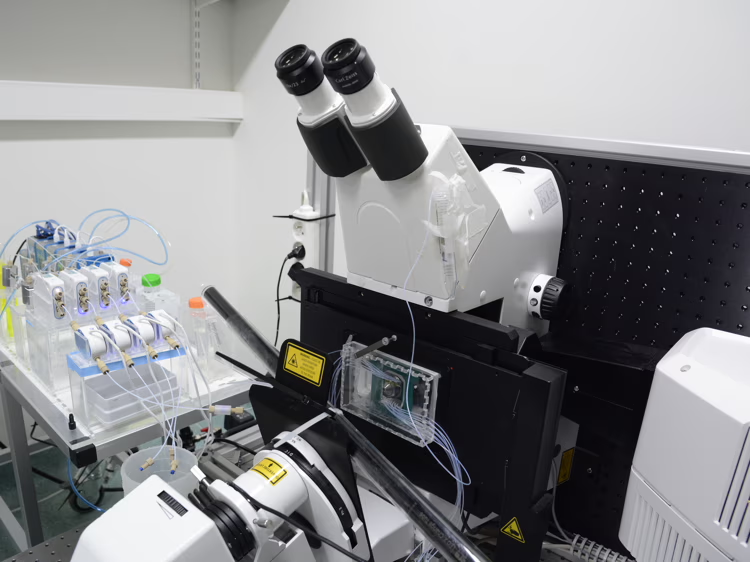
The Sustainability Strategy 2025–2030 is the backbone of our programme, built on a CSRD-aligned double materiality assessment. We have defined group-wide policies on climate, circular economy, sustainable procurement and own workforce to guide our daily actions.
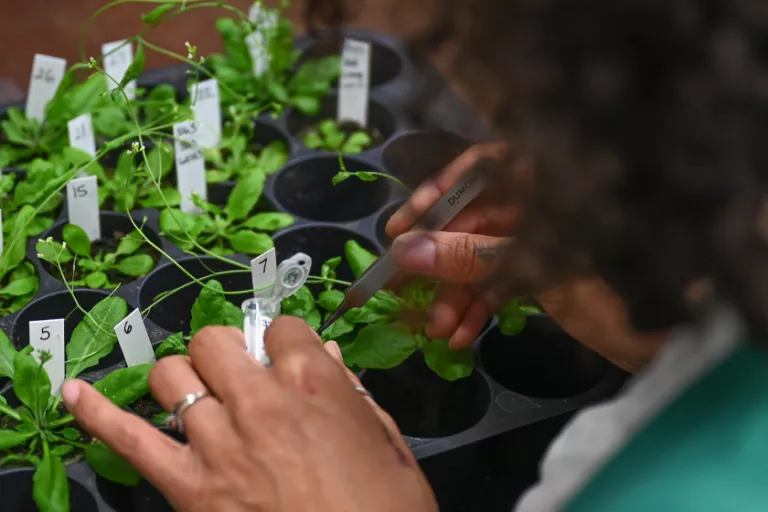
VIB has adopted a decarbonisation plan targeting climate neutrality by 2050, with science-aligned interim targets for 2030 and 2040. The roadmap focuses on phasing out fossil fuels, reducing procurement emissions, sustainable mobility, and improving energy efficiency.
Laboratory Efficiency Assessment Framework (LEAF) certification issued by University College London (UCL) for sustainable laboratory practices across VIB research groups. Levels achieved: Bronze 28, Silver 12, Gold 6 (as of 31/12/2025).